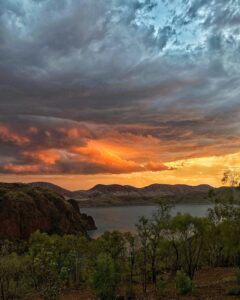
The Southwest Wilderness Area covers around 600,000 hectares of remote, largely inaccessible country in Tasmania’s bottom left corner. It is one of the largest temperate wilderness areas remaining on earth. It has been shaped by glaciers, scoured by weather systems that come straight off the Southern Ocean without touching land for thousands of kilometres, and preserved — by its own ferocious inaccessibility — in something very close to its original state.
Getting there is not simple. That’s the point.
The South Coast Track
The South Coast Track is one of Australia’s most demanding multi-day walks. It runs for roughly 85 kilometres along a coastline that is simultaneously one of the most beautiful and most punishing environments in the country — magnificent quartzite beaches, ancient rainforest, buttongrass plains, and river crossings that can become genuinely dangerous after rain.
Most walkers allow 7 to 10 days. The track is not marked in places, requires strong navigation skills, and should not be attempted by anyone who isn’t genuinely experienced in remote wilderness walking. The weather can change from calm to violent with almost no warning.
With all that said: it is one of the finest wilderness experiences available anywhere in the world.
Lake Pedder
Lake Pedder is one of Australia’s great environmental controversies — a unique glacial lake that was flooded in 1972 to create a hydroelectric scheme, despite one of the most sustained conservation campaigns the country had seen. The loss of the original lake remains a wound for Australian conservationists.
The flooded lake is vast and extraordinarily beautiful in its own right, and the surrounding wilderness is largely intact. Visiting it is a complicated emotional experience — the landscape is magnificent, and the knowledge of what was lost underneath it gives the beauty a melancholy edge.
Port Davey
Accessible only by light aircraft or on foot, Port Davey is a remote inlet on Tasmania’s southwest coast that has no permanent population and a history of shipwrecks, isolation, and the kind of stories that belong to genuinely remote places. The fishing is extraordinary. The solitude is absolute.
Why You Should Go
There are very few places left on earth that are this untouched. Places where the wilderness is not scenic backdrop but the actual, total reality — where you are genuinely small and genuinely alone and the natural world is genuinely in charge.
Tasmania’s southwest is one of those places. It requires effort, preparation, and a genuine willingness to be uncomfortable. What it gives back is an experience of wilderness that is becoming rare enough to be precious.
Go while it’s still this good.