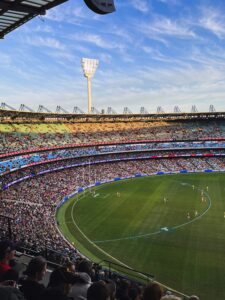
You know a sporting moment has transcended the game when your nan is texting you updates from the pub. That’s what happened in August 2023, when the Matildas went on a run that had an entire country holding its breath, crying at the television, and queuing for jerseys at stores that hadn’t stocked them in years.
But here’s the thing — that tournament was the spark, not the story. The story is what happened after. Women’s football in Australia has never been the same, and that’s not just a feel-good line. The numbers back it up.
The Participation Surge
Football Australia reported record participation figures in the months following the World Cup. Junior girls’ registrations jumped significantly across every state. New women’s community clubs formed in suburbs where the sport barely existed. Schools that had dropped girls’ football programmes quietly put them back on the timetable.
This kind of participation surge is exactly what hosting a major tournament is supposed to deliver — and unlike some sporting events, this one actually did. The legacy is tangible, visible, and still growing.
The Professional League Transformation
The A-League Women’s competition had spent years fighting for relevance — decent football played in front of modest crowds, covered by a handful of journalists who genuinely cared, and largely ignored by everyone else.
Post-World Cup, that changed. Broadcast deals improved. Crowds grew. Club memberships ticked up. Sponsors who had previously shown zero interest started making calls. The game didn’t become rich overnight, but it became visible in a way it had never been before.
Sam Kerr — already a global name from her Chelsea career — became a household name for people who had never previously cared about football. Her influence on a generation of young girls picking up a ball for the first time cannot be overstated.
Beyond the Field
The cultural shift mattered just as much as the sporting one. Watching the Matildas wasn’t a niche interest anymore — it was a shared national experience. Pubs put the games on without being asked. Workplaces organised watch parties. Social media was genuinely positive about women’s sport in a way that felt new and different.
There’s still a long way to go. Pay equity, broadcast investment, and grassroots funding remain ongoing battles. But the baseline has permanently shifted. A generation of kids grew up watching Australian women compete on the world stage and seeing the whole country care about it.
That’s not nothing. That’s everything.
What’s Next
The 2026 season shapes as the most competitive A-League Women’s campaign in the competition’s history. Several Matildas veterans are returning from overseas. A handful of talented teenagers are ready to announce themselves. And the crowds — well, the crowds are still coming.
Women’s football in Australia has arrived. The question now is whether the administrators, the broadcasters, and the sponsors are brave enough to back what the public has already decided it wants.
If the Matildas’ World Cup run taught us anything, it’s that Australians will show up when the product is worth showing up for. Right now, it is.